Considering Mission Valley for your San Diego stay? Discover what to expect from hotels, location, pools, and amenities, and who this central area suits best.
Why Mission Valley works so well as a hotel base
From the moment you exit the freeway at Hotel Circle, Mission Valley feels unapologetically practical. Long, low-rise buildings, palm trees, and a steady flow of travelers rolling suitcases toward their chosen San Diego hotel. This is not a postcard neighborhood. It is a strategic base that quietly makes a lot of sense.
Located in the central valley of San Diego, roughly 8 km from downtown and about 10 km from San Diego International Airport, the area gives you quick access in every direction. One day you are at the San Diego Zoo in Balboa Park before opening time, the next you are driving west to Mission Beach or north toward La Jolla without crossing the entire city. For guests who value time over scenery, this location is a good, almost obvious, choice.
The trade-off is clear. You do not stay in Mission Valley for charming streets or ocean views at night. You stay for efficient road links, a dense cluster of hotel options, and the ability to reach most of the region’s highlights in under 20 minutes. If your previous trips to San Diego felt fragmented, with long drives between attractions, basing yourself here can quietly fix that.
Types of Mission Valley hotels and who they suit
Along Hotel Circle North and Hotel Circle South, the offer is remarkably varied. Classic valley hotel properties with simple, clean rooms sit next to larger resort-style complexes with expansive outdoor pool decks. Some places feel almost residential, with kitchenettes and separate living areas for longer stays, while others focus on compact rooms designed for a quick business trip or a single night before an early flight.
Families usually gravitate toward the bigger resort hotel options. These often feature a large outdoor pool, a secondary kids’ pool, and a fitness center that stays open late, so parents can still exercise once children are asleep. Business travelers, by contrast, tend to prefer quieter buildings closer to the I-8 and I-805 junction, where access to corporate offices in Kearny Mesa or downtown San Diego is more direct.
There is also a middle ground. Some Mission Valley properties combine a modest hotel spa with a calm courtyard, giving guests a softer, more relaxed atmosphere without the full scale of a destination resort. If you are the type of guest who wants a glass of wine by the pool after a long day but does not need water slides or organized activities, these hybrid options usually feel like the best compromise.
What to expect from rooms, amenities, and service
Inside, rooms in Mission Valley hotels tend to prioritize function. Expect straightforward layouts, neutral tones, and an emphasis on comfortable beds rather than design statements. Many properties offer a mix of standard rooms and larger suites, so you can book according to how much space you actually need rather than paying for a view you will rarely enjoy. For families, adjoining rooms are common, which simplifies life when traveling with older children or grandparents.
A typical Mission Valley hotel will feature at least one outdoor pool, a small but serviceable fitness center, and a casual restaurant or bar. Larger complexes sometimes add a full hotel spa with treatment rooms, steam areas, and quiet relaxation zones, though this is not universal. When you compare options, look closely at how the pool area is arranged; some are set right against the parking lot, while others are tucked into inner courtyards that feel more secluded and pleasant to enjoy.
Service expectations should be calibrated accordingly. Front desk teams are used to handling a constant flow of arrivals from San Diego International, cruise terminals, and road trippers coming in off Interstate 5. Efficiency usually takes precedence over ceremony. If you value a more personal approach, pay attention to how previous guests describe staff interactions in their reviews, especially around check-in, housekeeping, and how quickly issues in the rooms are resolved.
Location nuances inside Mission Valley
Not every part of Mission Valley feels the same. Properties clustered directly on Hotel Circle sit closest to Interstate 8 and offer the fastest access to the coast and to the San Diego Zoo, but they also feel the most transient. You see the freeway, you hear it faintly, and you are reminded that this is a transport corridor first, a neighborhood second. For a short stay focused on driving between attractions, this can be a perfectly rational choice.
Further east toward Mission Center Road and Camino Del Rio North, the area opens up into a mix of offices, shopping centers, and residential pockets. Hotels here often sit near large retail complexes, which means easier access to supermarkets, casual dining, and everyday services. If you plan to stay several nights and prefer to walk to dinner rather than drive, this part of the valley usually works better.
On the western side, closer to the junction with Highway 163, you are slightly nearer to Balboa Park and downtown San Diego. It is a subtle shift, but for guests planning frequent evenings in the Gaslamp Quarter or Little Italy, shaving a few minutes off each trip can matter. When you compare Mission Valley options, map out your likely daily routes rather than just looking at the generic “located in San Diego” description.
Atmosphere, leisure facilities, and who will enjoy them
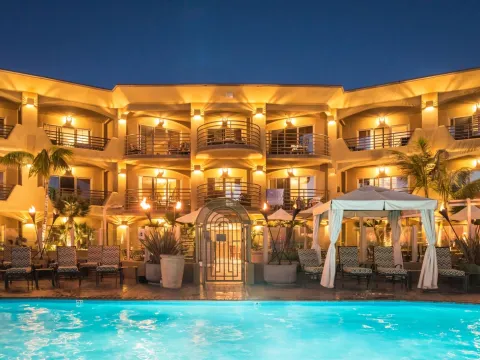
Pool culture is strong in this part of the city. Many Mission Valley properties build their identity around an outdoor pool area, sometimes with palm-framed decks, fire pits, and loungers that stay busy well into the evening. You will not get the ocean breeze of Mission Beach, but you do get reliably warm valley air and long, dry afternoons that make a quick swim between outings feel almost obligatory.
Some hotels lean into a resort hotel atmosphere, with landscaped grounds, multiple pools, and on-site dining that encourages guests to stay put. Others keep things deliberately simple: a single pool, a compact bar, and a quiet lobby where business travelers answer emails before heading out. If you are traveling with children, look for properties that mention splash areas or shallow zones; if you are on a couples’ trip, prioritize places where the pool deck is described as calm rather than lively.
Wellness facilities vary widely. A few addresses in Mission Valley offer a full hotel spa experience, with massages and body treatments that can turn a practical base into a small retreat. Most, however, limit themselves to a fitness center with cardio machines and free weights. Decide how much this matters to you before you book. For some guests, a clean, well-maintained gym is enough; for others, the absence of a spa is a deal-breaker on a longer stay.
How Mission Valley compares to other San Diego areas
Choosing Mission Valley is, in essence, choosing convenience over character. Stay in the beach neighborhoods and you gain atmosphere but lose time in traffic. Stay downtown and you are close to nightlife but farther from the family attractions that make San Diego popular with multi-generational trips. Mission Valley sits in the middle, both geographically and in terms of experience, which is precisely why so many guests return to the area on a previous visit.
For travelers focused on the San Diego Zoo, SeaWorld, and day trips to places like Old Town or Coronado, Mission Valley often works better than staying in any single attraction’s immediate vicinity. You are not locked into one side of the city. If you are flying into San Diego International and renting a car, the drive into the valley is straightforward, and you avoid the denser downtown grid when you head out again the next morning.
There are, of course, reasons to look elsewhere. If you want to step out of your hotel at night into a walkable neighborhood with independent restaurants and bars, downtown or North Park will feel more rewarding. If your priority is to wake up to the sound of waves, you will not find that here. Mission Valley is for travelers who treat the hotel as a comfortable, clean base camp rather than the main event of their San Diego stay.
Practical tips before you book a Mission Valley hotel
Parking and access should be at the top of your checklist. Many Mission Valley properties are designed around drivers, with large surface lots and easy freeway access. If you plan to rely on rideshares instead, look for hotels with sheltered drop-off zones and a front desk that operates smoothly at all hours, especially if your flight into San Diego International arrives late at night.
When comparing rooms, pay attention to layout and orientation. Some buildings face directly onto busy roads, while others wrap around inner courtyards or pool areas that feel more insulated. If you are a light sleeper, it is worth checking how guests describe noise levels in their reviews, particularly for lower floors. Families may prefer ground-level rooms near the pool, while business travelers often choose higher floors for a quieter stay.
Finally, think about your daily rhythm. If you expect to spend long days out and return only to sleep, a straightforward valley hotel with clean rooms and a reliable pool may be all you need. If you plan to work remotely between outings or to enjoy slow mornings on property, consider a place with more generous common areas, a calm lobby, and perhaps a small spa or garden where you can actually linger and enjoy being there, not just pass through.
Is Mission Valley a good area to stay in San Diego?
Mission Valley is a good area to stay if you want fast, central access to most of San Diego without committing to one specific neighborhood. It works especially well for guests planning to drive to multiple attractions, such as the San Diego Zoo, Balboa Park, and the beaches, because the freeway network converges here. You trade walkable local character for convenience, but in return you gain a practical, efficient base that suits family trips, road trips, and short business stays.
How far is Mission Valley from the main San Diego attractions?
Mission Valley sits roughly 8 km from downtown San Diego and about 10 km from San Diego International Airport, depending on your exact hotel. The San Diego Zoo and Balboa Park are usually a 10 to 15 minute drive, while Mission Beach and Ocean Beach are around 15 to 20 minutes away in normal traffic. This central position means you can reach most major attractions in under half an hour, which is why many guests choose the area as a base.
Who should choose a Mission Valley hotel over the beach or downtown?
A Mission Valley hotel suits travelers who see their room as a comfortable base rather than the focus of the trip. Families visiting several attractions, business travelers with meetings in different parts of the city, and road trippers arriving by car all benefit from the easy freeway access. If you want nightlife, independent restaurants, or ocean views right outside your door, downtown or the coastal neighborhoods will feel more rewarding than Mission Valley.
What kind of amenities do Mission Valley hotels usually offer?
Most Mission Valley hotels offer practical amenities such as outdoor pools, fitness centers, on-site parking, and casual dining or bar areas. Larger properties may add resort-style features like multiple pools, landscaped courtyards, or a full-service spa, while more compact hotels focus on clean rooms and efficient service. When you compare options, look closely at the pool layout, gym quality, and common spaces, as these elements shape your day-to-day experience more than the address itself.
Is Mission Valley safe for travelers?
Mission Valley is a busy commercial corridor that most travelers experience as safe, especially around the main hotel clusters on Hotel Circle and near the shopping centers. The area is designed around car access, so streets can feel less lively on foot than in residential neighborhoods, but that does not usually translate into safety concerns for typical guests. As in any urban environment, standard precautions apply, yet most visitors focus more on traffic and navigation than on security issues.