San Diego · Hotels
Porto Vista Hotel In Little Italy
We loved how Porto Vista Hotel treats its Little Italy address as a design brief,...
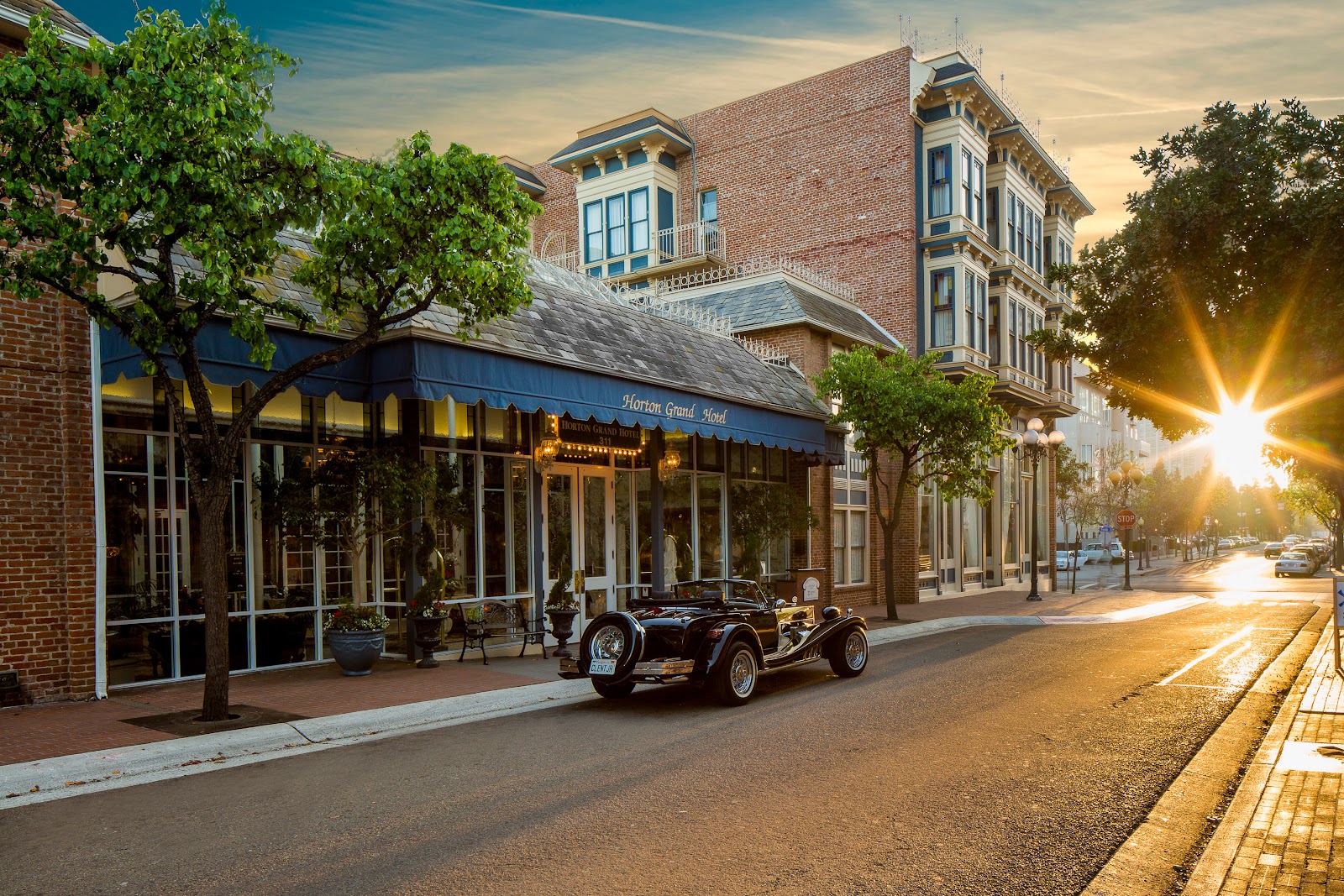
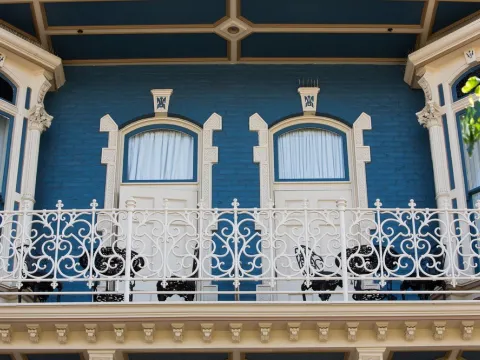
The Grand Horton opened in 1886, designed by Comstock and Trotsche for German immigrant Peter Mayerhofer, who modeled it on a hotel he remembered from Innsbruck, Austria, an ornate Italianate building with ironwork balconies and a grand interior staircase. Next door, the Brooklyn Hotel opened in 1887 and took on a rougher, working identity as the Brooklyn-Khale Saddlery once a saddle shop moved into its ground floor. Both buildings survived into the late 1970s, when the city's plans for Horton Plaza mall put them on the demolition list. Developer Dan Pearson intervened, and rather than save the buildings in place, had them dismantled a brick at a time, roughly 82,000 bricks and more than 40 tons of salvageable material, and reconstructed side by side at their current Gaslamp Quarter address, joined by a shared courtyard and atrium. The hotel reopened in 1986, at a reconstruction cost of twelve million dollars.
We chose the Horton Grand because almost no hotel claiming a Victorian pedigree can back it up the way this one can: these are not reproduction facades over new construction, they are two real nineteenth-century buildings, physically relocated and rebuilt rather than referenced. The split oak staircase, hand-carved and restored at a cost of two hundred thousand dollars on its own, and the hotel's authentic nineteenth-century window glass are details a themed hotel could never source. Pairing an elegant Italianate building with a rougher Cowboy-Victorian one next door also means the property reads as two distinct characters rather than one uniform brand exercise.
The Gaslamp Quarter is San Diego's historic downtown entertainment district, sixteen blocks of Victorian commercial buildings turned restaurants, bars, and shops, and the Horton Grand sits inside it rather than adjacent to it, a short walk from Petco Park, the Convention Center, and the waterfront. It's a location built for walking rather than driving, with the neighborhood's own nineteenth-century architecture setting the Horton Grand's history in context instead of leaving it to stand alone as a curiosity.
Price: $$$ (upper-upscale, historic boutique)
Vibe: Two rescued Victorian hotels joined by a shared courtyard
Rooms: 132
Best For: Travelers who want Gaslamp Quarter history with the architecture to prove it
Our Favorite Thing About the Hotel: The hand-carved split oak staircase, restored piece by piece
Dining: On-site restaurant and bar off the courtyard
Amenities: Courtyard and atrium, pet-friendly rooms, free WiFi
Attractions: Gaslamp Quarter, Petco Park, San Diego Convention Center
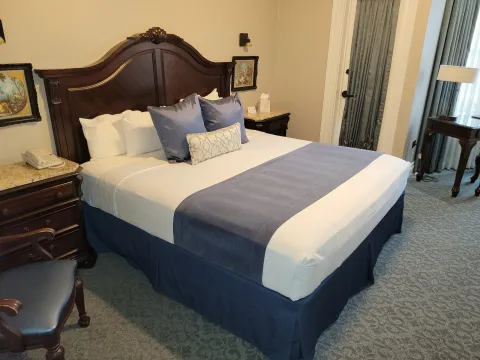
Rooms are furnished with period pieces sourced from New York rather than reproductions ordered for the project, and many retain original nineteenth-century window glass, the kind with the faint waviness that modern float glass can't replicate. The split oak staircase connecting the floors is the building's signature feature, carved by hand and expensive enough to restore that the hotel treats it as a landmark in its own right rather than a background detail. Rooms vary by which of the two original buildings they sit in, so the elegant Italianate side and the plainer Cowboy-Victorian side carry genuinely different characters rather than a single decorating scheme applied twice.
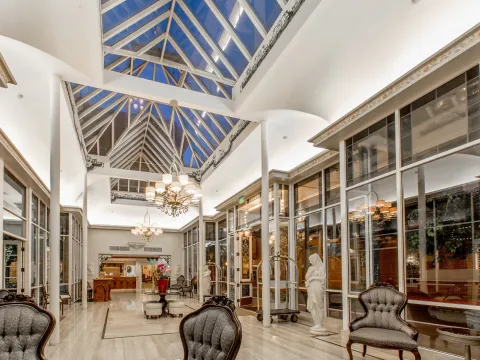
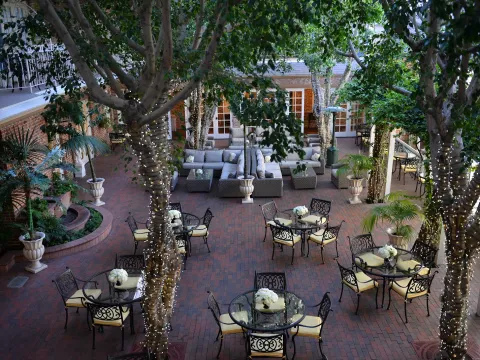
The shared courtyard and atrium that joins the Grand Horton to the Brooklyn-Khale is the clearest evidence of how the reconstruction actually worked: two separate buildings, rebuilt close enough together to share an outdoor heart, with the restaurant and bar opening onto it. It functions as the hotel's social center the way a single building's lobby might, except here it's framed by two different nineteenth-century facades facing each other rather than one. For guests, it's the easiest way to see both halves of the hotel's history in a single glance.
We loved how Porto Vista Hotel treats its Little Italy address as a design brief,...

We chose The Bristol because it commits to a pop-art identity rather than hinting at...
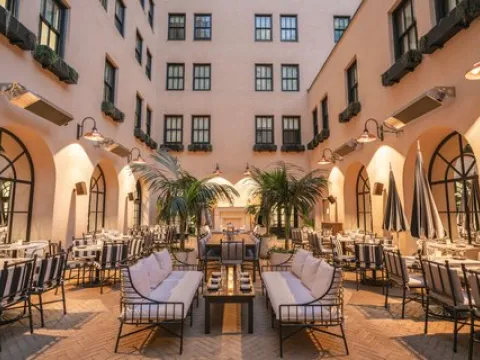
We picked The Guild Hotel because it does something few downtown hotels manage: it turns...